Charged With Burglary in Denver? Protect Your Future With an Experienced Colorado Burglary Defense Attorney

A burglary accusation in Colorado is never treated as a minor matter. Unlike many states, Colorado classifies every degree of burglary as a felony, which means that anyone facing this type of allegation is looking at the possibility of a permanent criminal record, significant prison time, and consequences that reach far beyond the courtroom. If you or someone you love has been accused of burglary in the Denver metro area, the decisions you make in the earliest hours and days after an arrest can shape the entire outcome of your case.
A conviction for burglary in Colorado can result in a lengthy prison sentence, steep fines, and a felony record that follows a person for the rest of their life, affecting employment, housing, and countless other opportunities. Because the stakes are so high, securing legal representation early is essential. The period immediately following an arrest is often when prosecutors are building their case, gathering witness statements, and reviewing surveillance footage. Having a knowledgeable defense attorney involved from the outset allows for evidence to be preserved, rights to be protected, and a strategic defense to begin taking shape before the state has the chance to control the narrative.
Denver criminal lawyer Jeff Weeden has spent his career defending clients accused of serious felony offenses throughout Colorado’s legal system. He understands how prosecutors in Denver courts approach burglary cases, and he uses that insight to build a strong defense tailored to each client’s unique circumstances. Whether the case involves a residential burglary allegation, a commercial break-in, or an accusation involving a vehicle or cargo container, Mr. Weeden works to identify weaknesses in the prosecution’s evidence and pursue the most favorable outcome possible, whether that means a dismissal, a favorable plea deal, or a strong defense at trial.
For a free consultation with an experienced Denver criminal defense lawyer at WeedenLaw, call (720) 307-4330 or send a message online today.
Why You Need a Denver Burglary Criminal Defense Attorney
Prosecutors throughout the Denver metro area tend to pursue burglary cases aggressively. Because burglary is a felony at every level in Colorado, prosecutors often treat these cases as high priority, seeking convictions that carry substantial prison time. This aggressive posture makes it critical to have a trial attorney on your side who will not be intimidated by the resources of the state.
A felony conviction carries consequences that extend well beyond a sentencing hearing. It can affect your ability to secure employment, obtain housing, maintain professional licenses, or exercise certain civil rights. What’s more, burglary convictions cannot be sealed under Colorado law, meaning the impact of a conviction can follow a person indefinitely. This makes the decisions made during the investigation and prosecution phases enormously consequential.
An experienced Denver criminal defense lawyer like Jeff Weeden protects your rights at every stage, from the initial police investigation through arraignment, pretrial motions, and, if necessary, trial. This includes ensuring that law enforcement did not violate constitutional protections during searches, interrogations, or arrests, and that any evidence used against you was obtained lawfully. Building a strategic defense from the outset, rather than waiting until closer to trial, gives your defense team the opportunity to interview witnesses while memories are fresh, secure surveillance footage before it is deleted, and identify legal challenges that could weaken the prosecution’s case.
Colorado Burglary Statute
Colorado’s burglary laws are outlined in Colorado Revised Statutes Sections 18-4-201 through 18-4-204, which cover first, second, and third-degree burglary as well as possession of burglary tools. Under Colorado’s criminal justice system, prosecutors must prove several specific elements beyond a reasonable doubt in order to secure a conviction. Generally, this includes showing that the accused knowingly entered or remained unlawfully in a building or occupied structure, and that they did so with the intent to commit a crime once inside.
Burglary vs. Theft: What’s the Difference?
One of the most common points of confusion in these cases is the distinction between burglary and theft charges. Theft involves unlawfully taking someone else’s property. Burglary, on the other hand, is centered on the unlawful entry itself, combined with the intent to commit a crime. This is why burglary charges may be filed even when nothing was ultimately stolen. If prosecutors can show that a person entered a building intending to commit theft, assault, or another offense, a burglary charge can stand even if the plan was never carried out.
Because of this overlap, burglary charges are frequently filed alongside related offenses, including criminal trespass, theft charges, criminal mischief, or even violent crimes if an altercation occurred during the incident. Intent is often the central battleground in these cases, and it is frequently the deciding factor between a conviction and an acquittal.
Whether you are facing criminal charges for theft, burglary, or both, a Denver theft lawyer at WeedenLaw can provide the aggressive defense you need to stand up to these charges and protect your future from the severe, life-altering impact a conviction can bring.
Types of Burglary Charges in Colorado
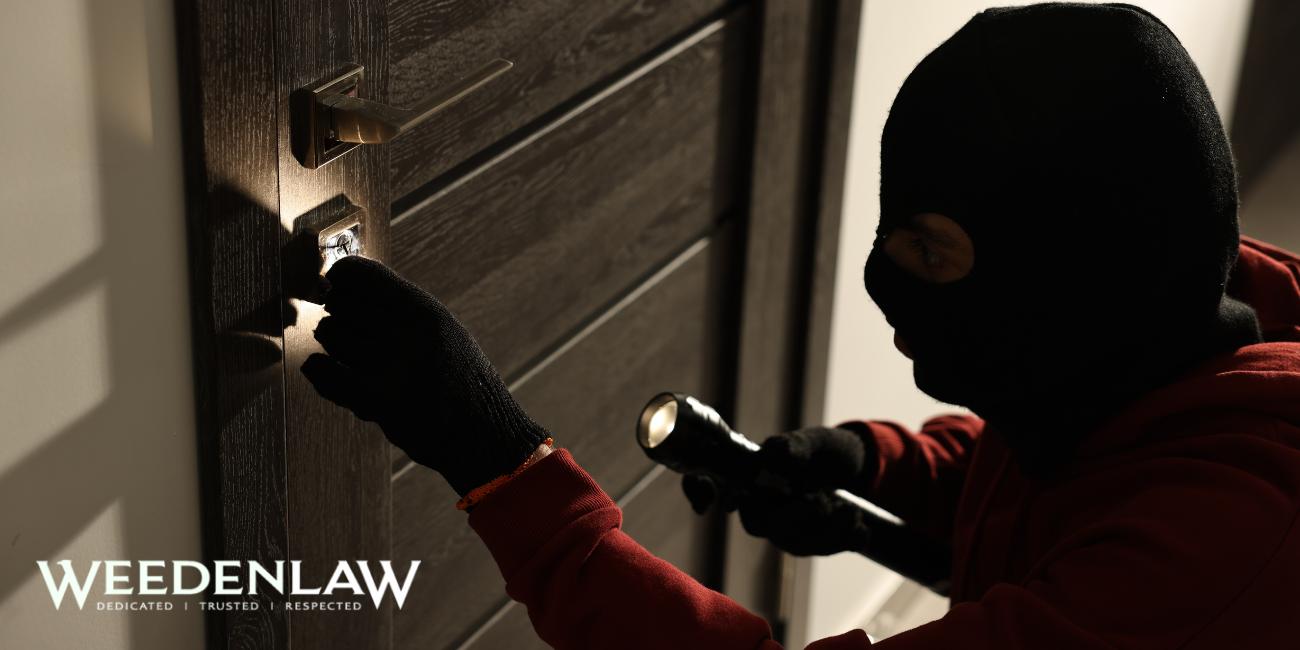
The type of property involved in an alleged burglary, whether it is a residential home, a commercial building, a vehicle, a vessel, or a cargo container, plays a major role in determining how harshly the offense is punished. If people were present on the premises at the time of the alleged offense, the charges and potential penalties can increase substantially.
In Colorado, burglary is always charged as a felony, with penalties ranging anywhere from one to 48 years in prison and fines between $1,000 and $1,000,000, depending on the severity of the alleged conduct, the underlying crime the person intended to commit, and whether anyone was threatened, intimidated, or if a weapon was used or threatened to be used.
Entering a closed vault or box is treated less severely than breaking into an occupied building or home. Regardless of the degree charged, penalties increase when the alleged intent involved obtaining controlled substances. The nature of the place or thing allegedly entered is the primary factor separating third-degree burglary from the more serious first and second-degree charges. Third-degree burglary typically covers conduct like cracking a safe, reaching into a cash register, or unlawfully entering a bank vault, while unlawfully entering or remaining in a building or occupied structure is central to first and second-degree burglary charges.
Intent to commit a crime is the final and often most contested element across all three degrees. It is frequently the deciding issue in whether someone is convicted or successfully defeats the criminal charges. Notably, third-degree burglary differs from the other two degrees in that a person does not need to be aware they are doing something wrong simply by being present in certain circumstances, which makes these cases especially fact-specific.
1st Degree Burglary Colorado
What is First-Degree Burglary in Colorado?
First-degree burglary is the most serious burglary charge under Colorado law. It applies when a person knowingly enters or remains unlawfully in a building or occupied structure with intent to commit a crime, and during the incident, either possesses a deadly weapon, uses or threatens to use a deadly weapon, or assaults another person. The presence of a weapon or a threat of violence is what elevates a burglary allegation from a lower degree into a first-degree charge, and it is one of the most heavily prosecuted offenses in Denver criminal defense.
1st Degree Burglary Colorado Sentence
First-degree burglary is generally classified as an F3, or Class 3 felony in Colorado, carrying a potential prison sentence of four to 16 years and fines that can reach $750,000, though sentencing can vary based on the specific circumstances of the case. If controlled drugs were the object of the burglary, the offense is elevated to F2, or a Class 2 felony. Class 2 felonies in Colorado bring a potential sentence of anywhere between eight to 24 years in prison, and up to $1,000,000 dollars in fines.
Aggravating factors, prior felony convictions, or habitual offender enhancements can push sentencing well beyond the standard range. Given the severity of these consequences, anyone facing a first-degree burglary charge in Colorado needs a knowledgeable defense attorney working to protect their future from the very beginning of the case.
2nd Degree Burglary Colorado
What is Second-Degree Burglary in Colorado?
Second-degree burglary involves knowingly entering or remaining unlawfully in a building or occupied structure with the intent to commit a crime inside, without the weapon or assault element required for a first-degree charge. Whether the property involved is residential or non-residential can significantly affect how the case is charged and prosecuted, with residential burglary allegations generally treated more seriously by Denver courts.
2nd Degree Burglary Colorado Sentence
Second-degree burglary of a dwelling or burglary of a controlled substance is typically charged as a Class 3 felony (4-16 years imprisonment + up to $750,000 in fines), while second-degree burglary involving a non-residential structure is generally a Class 4 felony (2-6 years in prison + up to $500,000 in fines). Aggravating circumstances, such as the value of property involved or whether the accused has prior criminal cases, can increase the penalties a person faces.
3rd Degree Burglary Colorado
What is Third-Degree Burglary in Colorado?
Third-degree burglary covers situations involving unlawful entry into or tampering with vaults, safes, cash registers, coin-operated or vending machines, and similar containers, with the intent to commit theft. Even though this degree does not require entry into an occupied building, Colorado still classifies it as a felony offense. Denver prosecutors handle these cases by focusing heavily on physical evidence and intent, since the accused’s state of mind is often central to whether the conduct meets the legal definition of burglary.
3rd Degree Burglary Colorado Sentence
Third-degree burglary is generally charged as a Class 5 felony, though it can be elevated to a Class 4 felony if the intent involved obtaining a controlled substance. A conviction can still carry significant prison time (1-3 years in prison for F5 or 2-6 years in prison for F4), fines (reaching up to $100,000 for F5 and $500,000 for F4), and other long-term consequences (including 2-3 years of mandatory parole), even though it is considered the least severe of the three burglary degrees.
Possession of Burglary Tools Colorado
Colorado law also criminalizes the possession of burglary tools, defined broadly as any tool, device, or instrument commonly used to commit burglary or theft, when possessed with the intent to use it for an unlawful entry. Prosecutors frequently point to items like pry bars, lock picks, glass cutters, or even common tools such as screwdrivers when alleging this offense.
Because the item itself is often legal to possess, intent becomes the central issue in these cases. Possession of burglary tools is typically charged as a Class 5 felony, carrying potential prison time and fines in addition to any related burglary charges.
How Prosecutors Attempt to Prove Burglary Cases
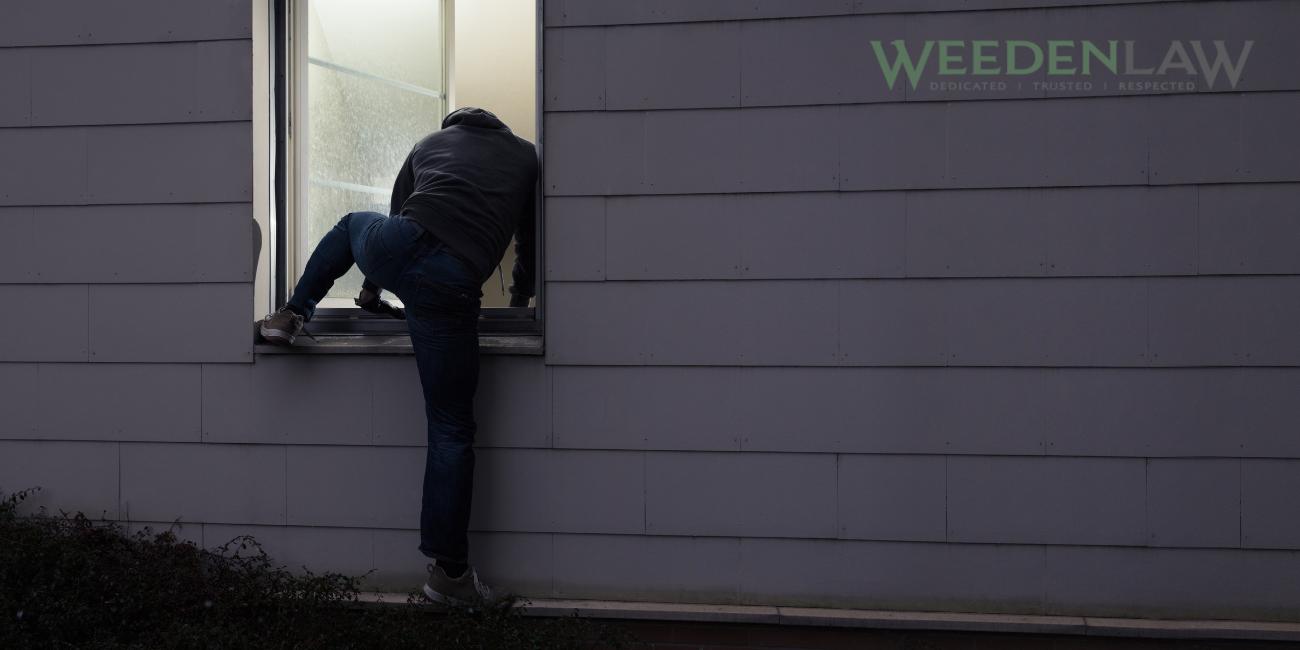
Denver prosecutors rely on a range of evidence to build burglary cases against the accused. This includes:
- Surveillance footage from homes, businesses, or nearby properties
- Witness testimony, whether from a homeowner, neighbor, or bystander
- Physical evidence, including fingerprints, tool marks, or items left behind
- Cell phone location data and other digital evidence
- Statements made to law enforcement during questioning
Understanding how each piece of evidence was obtained, and whether it was gathered lawfully, is a critical part of building a strong defense.
What To Do If You Are Arrested for Burglary in Denver
Anyone arrested on suspicion of burglary should exercise their right to remain silent and avoid discussing the details of the case with anyone other than their attorney, including friends, family, or on social media. Remember, statements made casually, even seemingly minor comments, can later be used by prosecutors to strengthen their case. It is also important to preserve any evidence that may support a defense, such as receipts, text messages, or witnesses who can speak to your whereabouts.
Above all, contacting a burglary lawyer immediately gives you the best chance of protecting your rights from the outset.
How a Burglary Defense Lawyer Can Protect Your Rights and Future
A defense attorney’s role begins well before a case reaches trial. From reviewing the legality of the arrest and any searches conducted, to communicating directly with prosecutors on your behalf, an experienced Denver burglary lawyer works to prevent early missteps from damaging your case. This includes advising you on interactions with law enforcement, identifying constitutional violations, and beginning the process of gathering favorable evidence right away.
Can Burglary Charges Be Reduced or Dismissed?
In many cases, burglary charges can be reduced or dismissed through skilled negotiation and a thorough review of the evidence. An experienced defense team may negotiate directly with prosecutors to pursue favorable plea deals, particularly when the evidence against a client is weaker than initially presented. Challenging weak or unlawfully obtained evidence can also lead to charges being reduced or thrown out entirely.
In some situations, alternative resolutions, such as diversion programs, may be available depending on the circumstances and a client’s criminal history. When the legal grounds exist, pursuing an outright dismissal remains the ultimate goal of any strong defense strategy.

Can a Burglary Conviction Be Expunged in Colorado?
Burglary convictions are not eligible for record sealing in Colorado. This means that law enforcement, the military, government entities, and the general public are all able to access these charges going forward. Landlords and employers throughout Denver and the surrounding areas are often unwilling to put their property, as well as the safety of their tenants or employees, at risk by renting to or hiring someone they perceive as a threat because of a burglary charge or conviction.
This permanence, combined with the many other consequences a burglary charge can bring, makes it all the more important to hire an experienced Denver criminal defense attorney who will fight to protect your future from the outset.
Common Defenses a Colorado Burglary Lawyer May Employ
Arguing that a client was not attempting burglary, but was instead engaged in simple trespassing, is one of the most common approaches a burglary defense lawyer can take to get charges reduced. Trespassing is still a crime, but it is far less serious than a felony burglary charge.
Denver criminal defense attorney Jeff Weeden has successfully fought burglary charges for previous clients using a variety of defense strategies. The specific circumstances of your case determine the optimal approach, which you can explore during a free, no-obligation consultation with Mr. Weeden.
Some examples of potential defenses to a burglary charge include:
- You did not enter the building with the intent to commit a crime
- You were not there to obtain narcotics, which would have resulted in a harsher punishment
- The property in question was not worth as much as the prosecution claims
- You did not have any weapon in your possession
- No threats were made against anyone during the alleged offense
- You were lawfully present on the property
- The property belonged to you, or you had permission to be there or to use the item in question
A Denver burglary charge is an incredibly serious offense with many moving parts. That is why it is critical to speak with and retain an aggressive burglary defense lawyer who will fight for your rights and pursue the strongest possible outcome in your case.
Why Choose WeedenLaw as Your Burglary Law Firm?
WeedenLaw is led by attorney Jeff Weeden, a dedicated Colorado criminal defense lawyer with extensive experience defending clients against serious felony allegations throughout the Denver metro area, including Denver County, Douglas County, Jefferson County, Arapahoe County, Broomfield County, Boulder County, Larimer County, Adams County, and beyond.
Mr. Weeden and his defense team understand that every case is different, and they take a personalized approach to each client’s situation rather than relying on a one-size-fits-all strategy. With a proven track record built on experience defending clients across a wide range of criminal cases, including violent crimes, theft charges, and felony burglary allegations, WeedenLaw is committed to providing an aggressive defense and protecting clients’ futures at every stage of the legal system, from the initial investigation through trial outcomes.

Contact a Denver Burglary Attorney Today
If you or a loved one has been arrested or is under investigation for burglary in Denver or the surrounding communities, do not wait to seek legal representation. The earlier a knowledgeable attorney with experience handling criminal defense law cases like yours becomes involved, the more opportunities exist to protect your rights and build a strong defense.
Speak with an experienced burglary attorney Denver residents can trust for a strong criminal defense strategy. Contact our law office online or by phone at (720) 307-4330 to schedule your free consultation today.